
When selecting and applying Surge Protective Devices (SPDs), many users focus on parameters such as maximum discharge current and nominal discharge current, yet tend to overlook another equally critical indicator — the voltage protection level, Up.
Though Up appears to be merely a figure on the product datasheet, it directly determines whether an SPD can deliver effective over‑voltage protection for downstream equipment.

Up stands for the voltage protection level of a surge protective device, normally expressed in kV. It serves as a key parameter for evaluating an SPD’s capacity to limit surge voltages.
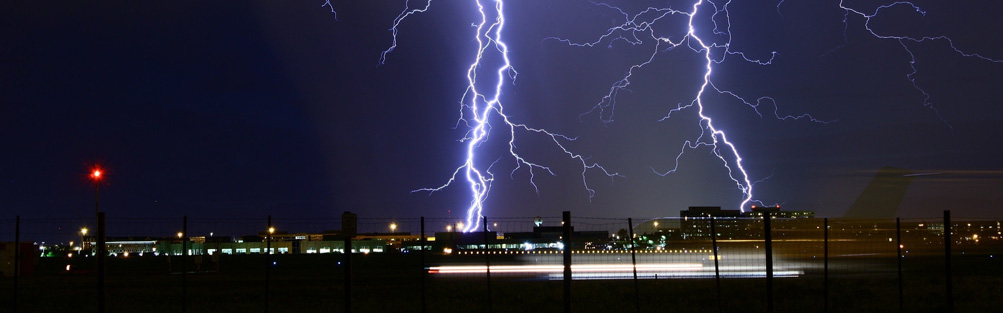
When lightning surges or switching over‑voltages intrude into an electrical system, internal protective components inside the SPD activate to divert or shunt surge current and clamp the voltage across its terminals.
Under specified test conditions, Up characterizes the achievable voltage protection level across the SPD terminals. Generally, with other conditions being equal, a lower Up value corresponds to stronger voltage‑limiting performance of the SPD.
It should be noted, however, that Up does not equal the total voltage borne by equipment after field installation. The length of connecting conductors, wiring layouts and variations in surge current can all affect the final protection performance.
An SPD does more than divert surge current. More crucially, it clamps over‑voltages within the withstand capacity of protected equipment.
For instance, assume a piece of equipment has an impulse withstand voltage of 1.5 kV. If the selected SPD features an Up of 1.2 kV, its nominal protection level is theoretically below the equipment’s withstand voltage.
This does not guarantee absolute equipment safety. In real‑world installations, inductance in SPD connecting cables produces additional voltage drops. As a result, the actual voltage arriving at the equipment terminals can exceed the SPD’s rated protection level. Excessive extra voltage may still damage equipment insulation or even trigger malfunctions.
Accordingly, SPD selection cannot rely solely on the nominal Up rating. Comprehensive assessment shall also take into account the equipment’s impulse withstand voltage, system voltage, installation location and connecting‑cable arrangements.
Reasonable control of protection levels is particularly vital for devices housing sensitive electronic components, such as PLCs, communication equipment and industrial control systems.
While meeting system operational requirements, the SPD’s voltage protection level shall be lower than the impulse withstand voltage of the protected equipment, with adequate safety margin reserved.
Mount SPDs as close as practicable to protected equipment or designated protection points, and keep connecting conductors as short as possible. Excessively long wiring may degrade practical protection effectiveness.
For critical power‑distribution systems, configure different types of SPDs in line with lightning protection zones, expected surge currents and equipment withstand capabilities. Proper coordination between successive protection stages is required; full protection shall never depend on a single SPD stage alone.
SPD selection should not be based merely on discharge‑current magnitude, nor should protection reliability be judged only by the colour of product status windows.
Discharge current defines the magnitude of surge shocks that an SPD must handle, whereas Up constitutes one major criterion for assessing its voltage‑clamping capability.
Only by combining the Up value, equipment withstand voltage, installation wiring and system‑level protection architecture can SPDs function as intended, furnishing more dependable lightning‑surge defence for electrical apparatus and electronic systems.
Reminder from Techwin: SPD selection shall be conducted with full consideration of practical application scenarios and applicable standards. Evaluate all key parameters comprehensively; never judge a product’s overall protection performance based on a single indicator.
 Factors Affecting the Price of the Lighthning Surge ProtectorSeptember 18, 2021Due to different levels of protection, performance and parameters, each lightning protection power protector manufacturers' products have different levels of research and development costs, input ...viewChoosing The Right Coaxial Surge Protection Device For Your NetworkJanuary 10, 2024As networks become increasingly complex and interconnected, the need for effective surge protection is paramount. Coaxial surge protection devices play a crucial role in safeguarding sensitive network...viewWrong‑mounted SPD Equals No SPD at AllSeptember 1, 2026Many users focus heavily on parameters such as discharge current capacity, protection level and product class when selecting a Surge Protective Device (SPD). Yet they tend to overlook an equally criti...viewThe Difference Between Surge Protector and Miniature Circuit BreakerJune 20, 20221. Surge protectorSurge protector, also known as lightning protector, is a protection device designed to prevent various electronic equipment, instruments, and communication lines from being subjected...viewThe role of ground potential counterattack protectorSeptember 28, 2021When the power distribution system is struck by lightning and when switching on or off inductive loads or large loads, it often produces high operating overvoltages, also called surge voltages. Surges...viewWill a surge protector still work after a power failure? –Comprehensive Technical AnalysisApril 27, 2025Systematic maintenance ensures SPD reliability post-power failure.view
 EN
 jp
 ko
 fr
 de
 es
 it
 ru
 pt
 ar
 vi
 th
 ro
 bg
 nl