
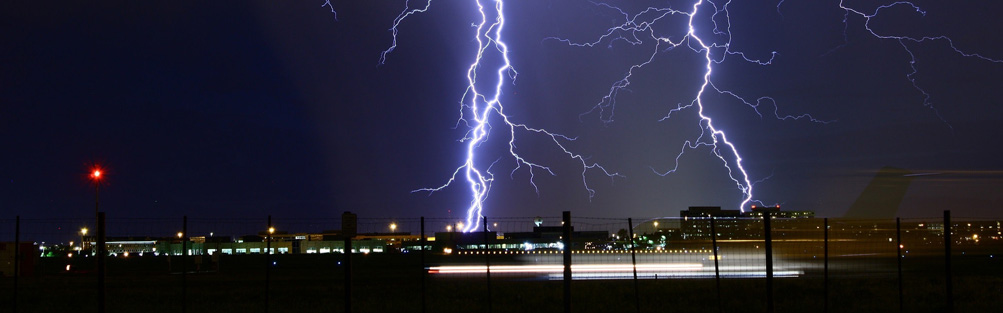
Currently, the world is experiencing significant changes, including planning and establishing new mobile radio sites, as well as revitalizing and expanding existing network infrastructure. In the era of 5G, IoT, and autonomous driving, the increasing demand for enhanced transmission capacity and network availability continues to drive the expansion of existing structures.
These changes impact the accessibility of cellular base station installations and systems. However, because mobile phone masts are exposed, they are susceptible to repeated direct lightning strikes, which can disrupt the entire system. Additionally, damage is often caused by surges, such as those from lightning strikes near mobile radio sites. Even individuals near these facilities during thunderstorms face safety risks.
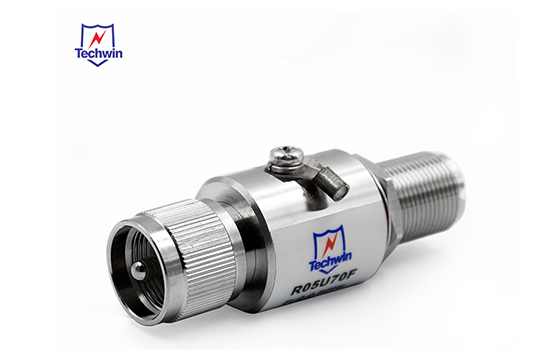
For mobile operators, lightning strikes are an unwelcome but inevitable problem. These towers can be quite tall, ranging from 50 feet to 200 feet, with some reaching up to 2000 feet. Because they often stand alone, they are highly vulnerable to lightning strikes.
Direct lightning strikes can release voltages as high as 100,000 volts (sometimes even higher), which can severely damage unprotected equipment. Despite extensive research, accurately predicting when and where lightning will occur remains uncertain. Furthermore, secondary effects of lightning may result in equally harmful voltage surges. These surges can occur even if the lightning is not very close. Hence, lightning-induced surges frequently happen.
After a lightning event, grounding lines may produce voltage spikes. Induction loops generated by the interaction of power lines and data lines can pick up nearby voltage surges. Exposed overhead power cables can transmit surges over long distances to various distribution systems. Even the wires from tower antennas to base stations can carry surges.
Due to the critical importance of sensitive electronic equipment and complex computers for infrastructure, induction surges can damage circuits in connected devices if not adequately protected. This is why installing surge protective devices is crucial to avoid the cost of repairs, replacements, and downtime. To keep cellular tower systems connected, the antenna surge protective device needs to meet strict standards for managing surges, especially regarding the highest test currents and maximum surge discharge during lightning. These devices must consistently redirect or absorb various surges caused by lightning without failure. Such reliability reduces the need for maintenance, repairs, and extra parts.
Cellular base stations are critical to communication infrastructure and must be shielded from surges caused by lightning. One of the primary concerns for telecom operators is towers going offline due to lightning strikes, which often target the tallest structures in an area. These towers are crucial because they must provide robust connectivity to ground users.
When lightning strikes the top of a cellular tower, it damages equipment located there, such as receivers, antennas, and remote radio heads. Additionally, this equipment connects to the gear at the bottom of the tower responsible for sending signals through the network. Surges from lightning also damage the base station's equipment. The surge travels along the cables connecting the top and bottom of the tower, affecting precision equipment on both ends.
To prevent further damage, industrial antenna surge protective devices can be strategically placed to divert surges away from sensitive equipment, thereby limiting the impact area. By integrating antenna surge protective devices into wireless cellular base stations, operators can reduce downtime and repair costs during lightning events. This enhances customer network functionality and improves company profitability.
Installing surge protective devices within cellular base stations is a beneficial move for all parties involved. To ensure optimal protection for your cellular base stations and other sensitive equipment, Techwin offers a range of high-performance antenna surge protective devices. To learn more about Techwin's products and services, please visit our website or contact our sales team.
 How to Determine Which Type of Surge Protector to Use for Distribution Box?March 13, 20231、Understanding of Network Surge ProtectorsA surge protector, also known as a lightning arrester, is an electronic device that provides safety protection for various electronic devices, instruments, ...viewEmerging Trends in Signal Surge Protector TechnologyFebruary 29, 2024As technology continues its relentless evolution, the realm of signal surge protectors is undergoing transformative changes. The surge protection landscape is witnessing innovative advancements driven...viewThe Importance of Lightning Protectors in Protecting Home Appliances and ElectronicsFebruary 29, 2024In today's digital age, our homes are filled with a multitude of electronics and appliances that we rely on daily. From televisions and computers to refrigerators and washing machines, these devic...viewSelection of Signal SPD Lightning Protection EquipmentMarch 13, 2023When it comes to the use of lightning arrester, many people lack a correct understanding of some of the parameters of the lightning arrester. Coupled with the increasing frequency of thunderstorms and...viewFactors Affecting the Price of the Lighthning Surge ProtectorSeptember 18, 2021Due to different levels of protection, performance and parameters, each lightning protection power protector manufacturers' products have different levels of research and development costs, input ...viewDo Commercial Buildings Need Surge Protection Devices for Lightning?June 26, 2024In the fast-paced modern world, electronic devices are the cornerstone of both businesses and homes for enhancing efficiency and connectivity. From smart appliances to complex industrial installations...view
 EN
EN
 jp
jp  ko
ko  fr
fr  de
de  es
es  it
it  ru
ru  pt
pt  ar
ar  vi
vi  th
th  ro
ro  bg
bg  nl
nl