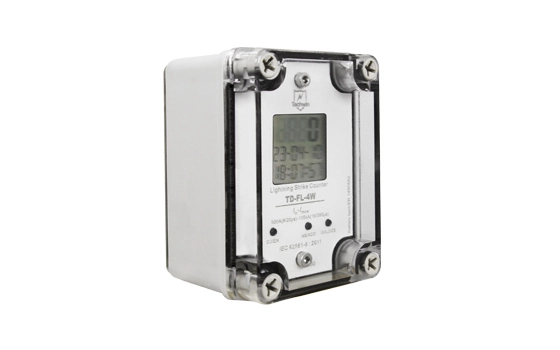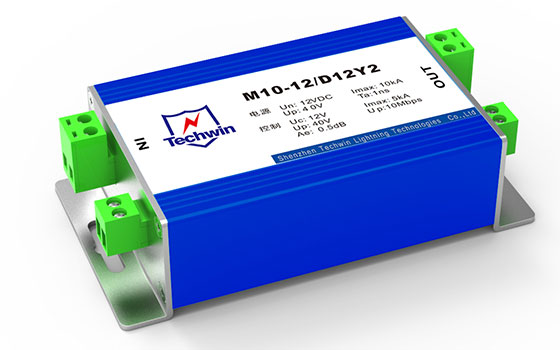

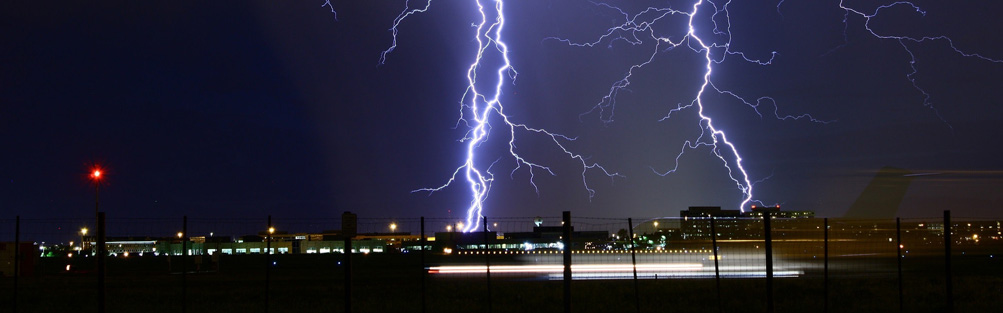
PC power supplies (PSUs) typically include basic surge protection, but they are not designed to handle large power surges (e.g., lightning strikes or grid fluctuations) effectively. Here’s how Shenzhen Techwin Lightning Technologies (TECHWIN) can enhance PC power supply protection with its surge protective devices (SPDs) and expertise in lightning protection:
Basic Protection: Most PSUs include minimal surge suppression (MOVs, filtering) for small voltage spikes but lack robust defense against high-energy surges.
No Dedicated SPDs: PSUs prioritize stable power delivery over surge protection, leaving PCs vulnerable to electrical surges.
Short Lifespan: Built-in components degrade over time, silently failing without warning.
TECHWIN’s Lightning Protection PDU (e.g., PDU10-220-6) can be installed between the wall outlet and the PC:
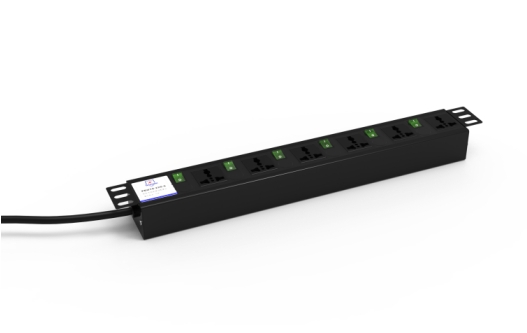
(Picture 1: PDU10-220-6)
Advantages:
- Higher surge tolerance (absorbs more surge energy than PSUs).
- Faster response time (nanoseconds vs. milliseconds in PSUs) and low residual pressure .
- Extends the lifespan of PC components by diverting surges before they reach the PSU.
TECHWIN’s SPDs modular (e.g., M40B2) with high energy MOV technology, installed into power distribution box before the wall outlet,can quickly response to protect the PCs.
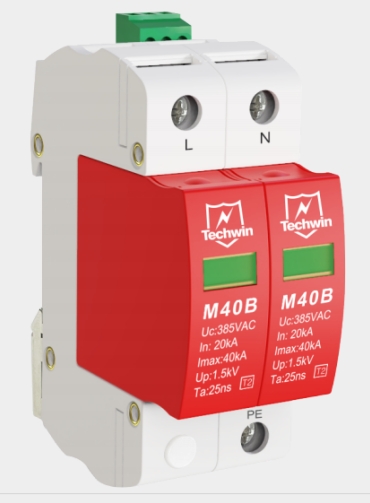
(Picture 2: M40B2)
For overall protection of general power distribution in high-risk environments (such as computer rooms, data centers), TECHWIN featured T1+T2 SPD (eg., MA25/4) can act as 3-phase SPDs for server racks.
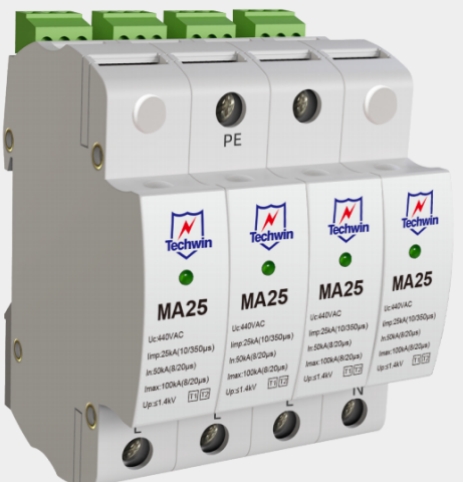
(Picture 3: MA25/4)
TECHWIN’s SPDs comply with IEC 61643 and UL 1449, ensuring compatibility with global PC power systems.
While PC power supplies offer minimal surge protection, TECHWIN’s SPDs provide professional-grade defense against high-energy surges. By offering Lightning Protection PDU, T2/Class C protection modules, and industrial solutions, TECHWIN can significantly improve PC power safety—especially in lightning-prone or unstable grid regions.
For detailed product specs, refer to TECHWIN’s surge protective devices like the PDU10-220-6, M40B2 and MA25.
 The Importance of Installing Lightning Protection DevicesOctober 25, 2021With the development of the society, urban construction continues to improve, the height of floors continues to increse. As the urban and city layout changes, it will affect the existing magnetic fie...viewHow Do Telecommunications Surge Arresters Protect Telecom Facilities?July 3, 2024As global connectivity deepens, the role of telecommunications has become more important than ever. The security, connectivity, and continuity of telecom systems are crucial. Any telecom interruption ...viewWhen Do You Need to Install Surge Protection Devices?October 9, 2024Frequent Thunderstorm Areas and Seasonal ProtectionIn regions where thunderstorm activities are frequent, especially during the summer thunderstorm season, it becomes particularly important to install...viewFactors Affecting the Price of the Lighthning Surge ProtectorSeptember 18, 2021Due to different levels of protection, performance and parameters, each lightning protection power protector manufacturers' products have different levels of research and development costs, input ...viewHow to install a SPD?August 11, 2023Techwin surge protective devices (SPDs) are designed to protect electrical equipment from power surges. Installing an SPD is essential to ensuring the safety and longevity of your devices. Here is a s...viewWhere to install surge protectors in a solar power systemMarch 14, 2023view
 EN
EN
 jp
jp  ko
ko  fr
fr  de
de  es
es  it
it  ru
ru  pt
pt  ar
ar  vi
vi  th
th  ro
ro  bg
bg  nl
nl