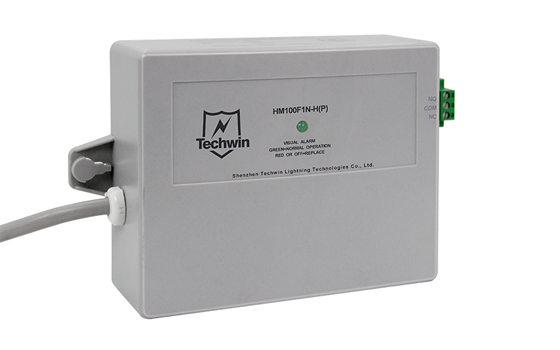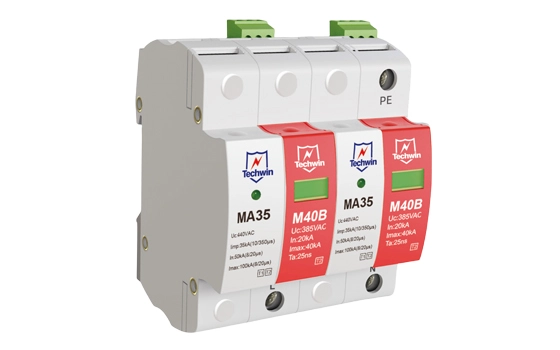

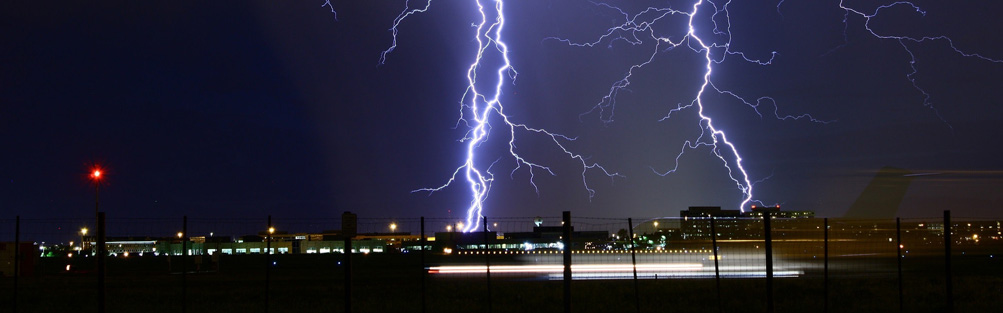
In modern industrial electrical systems, lightning and electromagnetic surges are common issues that can cause severe equipment damage. To guard against these electrical interferences, surge protectors against lightning have emerged. This article will delve into the definition, working principle and functions of a surge protector against lightning, and compare it with a lightning arrester to reveal its importance in industrial settings.
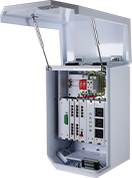
Protects equipment from lightning strikes: Voltage pulses generated by lightning can cause severe damage to equipment. Surge protectors against lightning quickly respond to these pulses, directing them to the ground to prevent overvoltage damage.
Guards against electromagnetic surges: Industrial electrical systems often experience electromagnetic surges, such as transients caused by power switches, inductors, and capacitors. Surge protectors against lightning effectively mitigate the impact of these transient voltages, ensuring normal operation of the equipment.
Enhances system reliability: Installing smart surge protectors against lightning can significantly improve the stability and reliability of electrical systems, extend the lifespan of equipment, and reduce maintenance costs.
While both surge protectors against lightning and lightning arresters are used for lightning protection, there are some key differences between them.
Different working principles: Surge protectors against lightning primarily limit overvoltage through changes in resistance, directing the excess voltage to the ground; whereas lightning arresters, also known as lightning rods, distort the ground electric field as a lightning cloud discharge approaches the ground. At the tip of the lightning rod, a space with a concentrated local electric field is formed, influencing the direction of the lightning leader discharge, guiding the lightning to discharge towards the lightning rod. The current is then directed into the ground through a grounding wire and grounding device, thereby protecting the object from lightning strikes.
Different applicable scopes: Surge protectors against lightning are more suitable for electronic devices and sensitive electrical equipment, whereas lightning arresters are used to protect buildings, tall trees, etc., from lightning strikes. A striker is installed at the top of the object to be protected and connected to a ground drainage network with compliant wires, usually used to protect buildings, antenna towers, and other large structures.
Different response speeds: Surge protectors against lightning have a relatively fast response speed, capable of responding to voltage changes within milliseconds; lightning arresters have a relatively slower response speed, requiring some time to release the overvoltage.
In modern industries, the stable operation of electrical systems is crucial to the production process. As an effective protective device, the surge protector against lightning provides reliable protection for electrical systems through its unique working principles and mechanisms. Compared to lightning arresters, surge protectors against lightning perform better in protecting sensitive equipment, contributing significantly to the reliability and stability of industrial electrical systems. By thoroughly understanding surge protector against lightning, we can better comprehend the applications and value in the industrial field.
 Intelligent PDU Surge Protector: A Perfect Combination of Efficient Protection and Smart ManagementApril 23, 2025As the widespread use of modern data centers, video surveillance systems, Ethernet switches, and various terminal devices continues, the safety and stability of power equipment have become particularl...viewHow to connect a surge protector?March 3, 2023Connecting surge protectors in an industrial setting requires additional considerations and precautions compared to connecting surge protectors in a residential setting. Here are some general steps to...viewDo surge protectors protect against lightning?November 28, 2023In the realm of electronic device protection, surge protectors often take center stage. Many homeowners invest in these devices to shield their gadgets from power surges caused by various factors. How...viewHow do SPDs work?March 3, 2023SPD stands for Surge Protective Device, which is a device that is designed to protect electrical and electronic equipment from voltage surges and transients. Here is a brief explanation of how SPDs wo...viewThe Meanings of Uc and Up on AC Power SPD and How to ChooseJuly 3, 2024Power surge protectors, also known as power lightning protectors, are suitable for AC 50/60Hz power supply systems and can protect the power systems of residential homes, tertiary industries, and indu...viewThe Principle of Surge Protector Lightning ProtectionSeptember 18, 2021The energy of lightning is huge, and lightning strikes can lead to casualties and property damage. With the development of technology, mankind has developed many lightning protection products to prote...view
 EN
EN
 jp
jp  ko
ko  fr
fr  de
de  es
es  it
it  ru
ru  pt
pt  ar
ar  vi
vi  th
th  ro
ro  bg
bg  nl
nl