
Passive Protection Mechanism: SPDs rely on passive components (e.g., Metal Oxide Varistors (MOVs), gas discharge tubes) to suppress surges without requiring external power.
Self-Recovery Capability: For transient overvoltages (e.g., lightning strikes), SPDs
automatically reset to a high-impedance state after diverting the surge energy.
Key Limitations:
Cumulative Damage: Repeated high-energy surges degrade MOV performance (increased clamping voltage/slower response).
Sustained Overload Risk: Prolonged overvoltage (e.g., undetected voltage spikes) may cause overheating and failure.
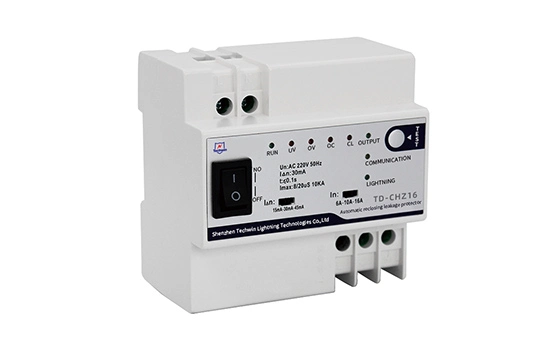
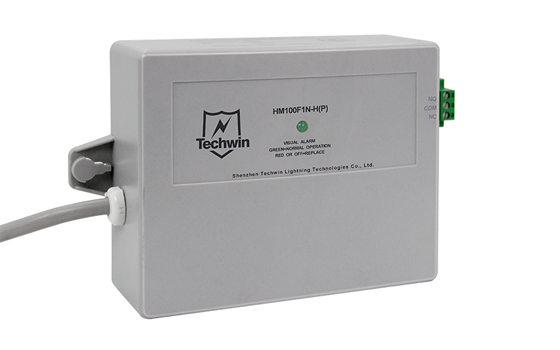
The surge protector for sale is widely used in various electronic equipment, instruments and communication lines. They are suitable for AC 50/60HZ, rated voltage 220V/380V power supply systems (China), as well as various voltage systems in other countries. It is suitable for residential, tertiary and industrial fields, and can effectively protect power and signal systems from lightning strikes and other transient overvoltage surges1
| Failure Type | SPD Status Change | Post-Failure Functionality |
| Planned Outage (Maintenance) | No surge stress; SPD remains intact. | Fully operational |
| Transient Fault (Lightning) | SPD briefly conducts to dissipate energy, then self-resets. | Requires cumulative damage check |
Sustained Fault (Short-circuit/Overvoltage) | May trigger fuse tripping or SPD thermal damage. | Replacement needed |
Basic Type ( SPD module)
Single-stage MOV protection; remains functional post-outage if undamaged.
Risk : No fuse protection may lead to direct short-circuit during overload.
Backup-Protected Type/SSD (Circuit Breaker/Fuse Combo)
Fuse disconnects SPD during extreme surges.
Recovery: Requires manual fuse replacement/circuit breaker reset.
Smart Type (with Monitoring SPD):
Logs surge events but loses communication during prolonged outages.
Note: Core protection remains active if components are intact.
Parameter Mismatch
SPDs with maximum continuous operating voltage (Uc) lower than line voltage degrade faster.
Insufficient Insulation Coordination
Residual voltage post-surge may damage poorly insulated equipment.
Switch-On Surges
Power restoration spikes can fatally damage aged SPDs.
| Test Method | Procedure | Pass/Fail Criteria |
Visual Inspection | Check status LED (green=OK, red/off=failed) or color-changing window. | No indicator → Further testing |
| Multimeter Test | Measure MOV resistance (power off). | Significant drop/zero Ω = failed |
| Professional Evaluation | Use dedicated testers to verify clamping voltage/leakage current. | Parameters out of spec → Replace |
Regular Inspections
Mandatory after thunderstorms or major power disturbances.
Multi-Stage Protection
Deploy primary (first-level) SPD + secondary (cabinet) SPD + tertiary (outlet) SPD.
Parameter Matching
Ensure SPD’s Uc voltage and surge current rating (In/Imax) align with grid requirements.
Prompt Replacement
Replace failed SPDs or blown fuses immediately to avoid protection gaps.
Final Conclusion
Normal Conditions: SPDs self-recover after outages/transient faults.
Failure Conditions: Sustained overvoltage, fuse tripping, or parameter mismatch cause permanent failure.
Strategy: Combine visual checks + instrument testing, implement multi-stage protection, and ensure grid compatibility.
Appendix: SPD Lifecycle Management Flowchart
Power failure → Determine fault type (transient/sustained)
↓
Transient fault → SPD auto-resets → Log surge count → Periodic degradation checks
↓
Sustained fault → Inspect fuse/circuit breaker → Test SPD components → Replace damaged parts
Systematic maintenance ensures SPD reliability post-power failure.
 Power Surge Monitoring Device: Intelligent Monitoring and Power ProtectionOctober 9, 2024In modern life, electricity has become the cornerstone of our daily life and work. However, with the increasing complexity of the power network and the presence of unforeseen factors such as lightning...viewThe Importance of Installing Lightning Protection DevicesOctober 25, 2021With the development of the society, urban construction continues to improve, the height of floors continues to increse. As the urban and city layout changes, it will affect the existing magnetic fie...viewDo surge protectors protect against lightning?November 28, 2023In the realm of electronic device protection, surge protectors often take center stage. Many homeowners invest in these devices to shield their gadgets from power surges caused by various factors. How...viewDifference Between Surge Protector and Backup ProtectorApril 26, 2022The special protection device for low-voltage surge protector (SSD) is an external disengagement device of the surge protector used in the low-voltage power supply system, which can withstand the expe...viewThe Difference Between Surge Protector and Leakage ProtectorOctober 25, 20211. The introduction of lightning surge protector and leakage protector(1) Lightning surge protectorLightning surge protector, also called lightning protection device, is an electronic equipment which ...viewHow to Wire a Three-phase Surge Protector?September 22, 20221. Wiring method of three-phase surge protectorIn the TN system, in general, the surge protector only needs to be connected in common mode, that is, connected between the neutral line of the phase lin...view
 EN
EN
 jp
jp  ko
ko  fr
fr  de
de  es
es  it
it  ru
ru  pt
pt  ar
ar  vi
vi  th
th  ro
ro  bg
bg  nl
nl