
Firstly, you need to understand what a power surge is before understanding how a surge protection device works. When the voltage passes through an electronic device and if the voltage exceeds the standard level (120 volts), then the voltage rise state is called a power surge. There are many reasons for a power surge, such as the use of high-power equipment, line aging, lightning strikes, and equipment failures from power companies. The power surge can generate high temperatures in wires and components in electronic products and cause them to be damaged. Even if the power surge does not damage the electronic components, it will cause damage to the internal components and shorten their service life. In fact, no one is aware of the occurrence of a power surge until the electrical equipment suddenly stops working.
Building surge protector can be used to prevent damage to the equipment caused by sudden surges. It works by conducting current from a power socket, and then conducting it out through the equipment that has been installed with a surge protection device. The metal oxide varistor is an important device in the surge protector, which can divide and conduct any excess voltage to ensure that the voltage and power levels received by the device are consistent. The working principle of a metal oxide varistor is similar to a pressure-sensitive valve. When the metal oxide varistor detects a high level of voltage, it can reduce the resistance, and it can increase the resistance if the voltage level is too low. In addition, it can automatically start to change the direction of the voltage when necessary. The metal oxide varistor consists of three parts, including a metal oxide connected to the power supply and two grounding wires connected to the semiconductor. The semiconductor has a variable resistance, which allows electrons to move by changing the resistance when the voltage is too high or too low.
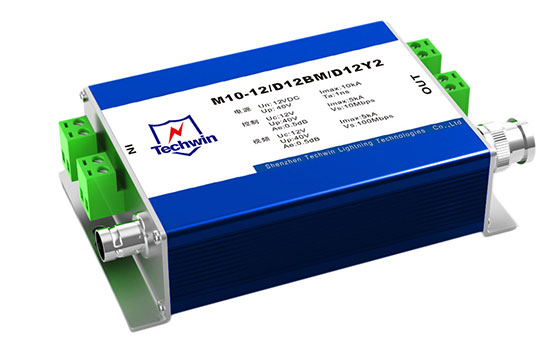
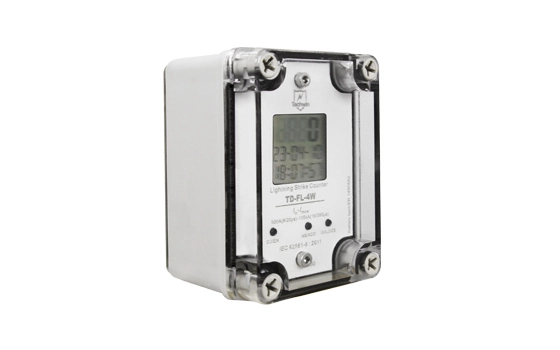
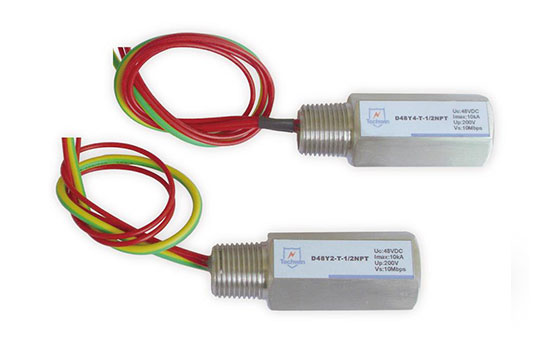
Techwin is your trusted partner as a surge protection supplier, offering a comprehensive range of cutting-edge products designed to safeguard your electronic equipment. Our lightning protection boxes, leakage protectors, SPD (Surge Protective Devices) for telecom, and Ethernet SPDs are engineered with precision to provide unparalleled protection against power surges and electrical anomalies.
 How does A Surge Protective Device ( SPD ) work?April 16, 2025A Surge Protective Device (SPD) is designed to protect electrical systems and equipment from voltage spikes or surges. These surges can occur due to lightning strikes, power outages, or switching even...viewCharacteristics and applications of combination type surge protectorsMarch 25, 2024Combination type surge protection devices (SPDs) are advanced surge protection systems designed to provide enhanced protection against transient overvoltages and surges in electrical systems. They typ...viewWhat Are the Requirements of Grounding Resistance Testers on the Resistance Value of Grounding Resistance?September 18, 20211. Grounding resistance test meter's requirements for the resistance value of the grounding resistance(1) Independent lightning protection grounding resistance is≤ 10Ω.(2) Independent safety pro...viewDo surge protectors work against lightning?April 27, 2025Although surge protectors cannot directly prevent lightning strikes, they can significantly reduce the damage caused by lightning strikes to electrical equipment and circuits. As a specially designed ...viewTechnical terminology in IEC61643 standards-1December 8, 20212.1 Technical Term2.1.1. Lightning electromagnetic impulse (LEMP)It is a source of interference. Refers to the effect caused by lightning directly hitting the lightning protection device of a building...viewThe Meanings of Uc and Up on AC Power SPD and How to ChooseJuly 3, 2024Power surge protectors, also known as power lightning protectors, are suitable for AC 50/60Hz power supply systems and can protect the power systems of residential homes, tertiary industries, and indu...view
 EN
EN
 jp
jp  ko
ko  fr
fr  de
de  es
es  it
it  ru
ru  pt
pt  ar
ar  vi
vi  th
th  ro
ro  bg
bg  nl
nl