
In the field of building safety, the technology encompassed within lightning protection devices for building structures serves as a strong shield against the unpredictable nature of lightning. This passage takes a deep dive into the complex details of the technology that powers these devices, highlighting the sophisticated mechanisms that help protect buildings from the damaging potential of lightning strikes.
At the center of many lightning protection systems for buildings are lightning rods. These devices work based on the principle of providing a preferred point of contact for lightning strikes. By establishing a designated path, lightning rods redirect the electrical discharge away from critical structural components, reducing the risk of damage to the building.
Essential to the functionality of lightning protection devices are conductors, usually made from materials like copper or aluminum. These conductors form a network that links lightning rods to grounding systems. The low resistance of these conductors ensures the efficient absorption of electrical energy into the ground, preventing harm to the building and its inhabitants.
The materials used in lightning protection devices for building structures undergo thorough engineering to meet the demanding requirements of their application. Lightning rods, air terminals, and conductors are commonly crafted from corrosion-resistant materials to withstand the tough conditions of various climates. These materials are meticulously chosen to guarantee the durability and dependability of the full lightning protection system.
Recent advancements in materials science have brought forth composite technologies to boost the performance of lightning protection devices for buildings. Composites offer enhanced strength and durability while maintaining a lightweight profile. This innovation aids in the overall efficiency and durability of the lightning protection system.
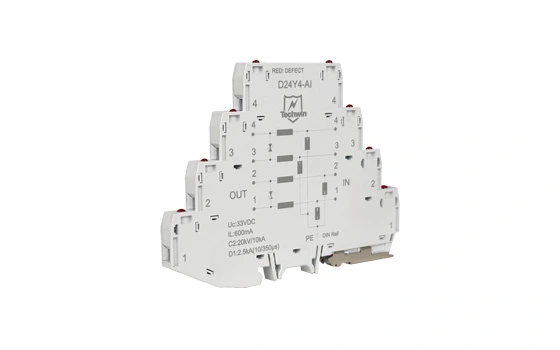
Aside from the physical components, surge protective device (SPD) play an essential role in lightning protection technology. SPDs are created to restrict voltage spikes caused by lightning strikes. They channel excess electrical energy away from sensitive equipment inside the building, preventing damage to electronic systems, appliances, and other crucial infrastructure.
An effective grounding system is a key element in lightning protection technology. Grounding rods or plates are tactically positioned around the building and connected to the lightning protection system. The objective of grounding is to provide a secure route for the dispersion of electrical energy into the ground, preventing the build-up of charge within the building.
Some advanced lightning protection systems incorporate Early Streamer Emission (ESE) technology. ESE systems feature air terminals designed to emit a streamer that reaches the approaching lightning before a natural strike can occur. By enhancing the attraction range, ESE technology provides an extended zone of protection, increasing the response time to an approaching lightning strike effeciently.
ESE technology operates on ionization principles, where the air around the air terminal is ionized, creating a path for the streamer. This ionization process initiates the streamer early, enabling a proactive response to the imminent lightning event. ESE technology represents a state-of-the-art approach to lightning protection, offering an extended protective radius.
The technology incorporated within lightning protection devices for building structures is a sophisticated blend of engineering skill and scientific ingenuity. Lightning rods, conductors, surge protective devices, advanced materials, and emerging technologies like ESE collectively form a comprehensive defense system. As buildings keep evolving in complexity and design, so does the technology that strengthens them against the unpredictable power of lightning, enhancing their resiliency and ensuring the safety of occupants and assets.
Techwin stands as a leading surge protection supplier in China, specializing in the development and production of lightning protection device. With the continuous progress of science and technology, more and more lightning protection products will be developed, looking forward to discussing more updated lightning protection technology with more lightning protection experts.
 View of beautiful waterfall in Maluan Mountain in autumnOctober 21, 2022In order to enrich the cultural life of employees, under the organization of the Administration Department, We established "Techwin Outdoor Activities Team" mean to our employees to w...viewWhat is type 2 surge protection?February 24, 2023What is type 2 surge protection?viewHow does A Surge Protective Device ( SPD ) work?April 16, 2025A Surge Protective Device (SPD) is designed to protect electrical systems and equipment from voltage spikes or surges. These surges can occur due to lightning strikes, power outages, or switching even...viewWhich instruments and meters need to be equipped with lightning protection modules?October 25, 2021Which instruments and meters need to be equipped with lightning protection modules?Instruments and meters often encounter unexpected voltage transients and surges during use, which can cause damage to...viewApplication of Surge Protector Against LightningNovember 9, 20211. The development of the surge protector against lightningAs early as the 1950s and 1960s, surge protectors have been widely used in lightning protection design. Surge protectors were first called vo...viewWhat is a Surge Protector?October 25, 20211. Surge protectorA surge protector is a small electrical device with two functions. The first function is to allow multiple components to be plugged into the same power outlet. The second function, w...view
 EN
EN
 jp
jp  ko
ko  fr
fr  de
de  es
es  it
it  ru
ru  pt
pt  ar
ar  vi
vi  th
th  ro
ro  bg
bg  nl
nl