
Connecting surge protectors in an industrial setting requires additional considerations and precautions compared to connecting surge protectors in a residential setting. Here are some general steps to follow:
1. Determine the appropriate location for the surge protector. In an industrial setting, surge protectors are typically installed at the main electrical panel or at critical equipment locations.
2. Choose a surge protector that is rated for the appropriate voltage and power capacity for your industrial equipment. Surge protectors come with a maximum voltage and joule rating, so make sure you choose one that can handle the power demands of your equipment.
3. Install the surge protector according to the instructions of surge protector manufacturers. This typically involves shutting off power to the circuit, removing the circuit breaker or fuse, and connecting the surge protector between the circuit breaker or fuse and the circuit panel.
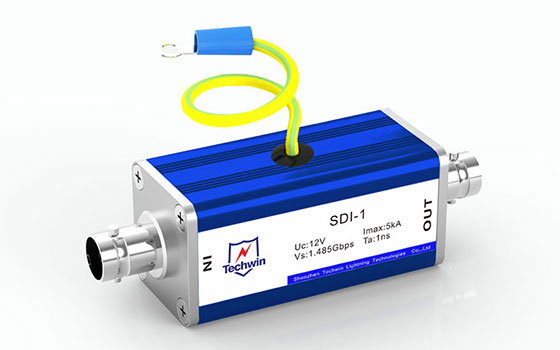
4. Connect your industrial equipment to the surge protector using their respective power cords. Make sure each device is securely plugged in and that the cords are not frayed or damaged. When connecting industrial equipment, it is important to use a CCTV surge protector, which can help ensure the smooth operation of the industrial equipment, preventing malfunctions and other issues that could lead to costly repairs or downtime.
5. Turn on your equipment and test that they are functioning properly.
6. Periodically check your surge protector for any signs of wear or damage. If you notice any cracks or other signs of wear, replace the surge protector immediately.
7. Consider implementing a regular maintenance program to ensure that your surge protectors are functioning properly and providing adequate protection for your industrial equipment.
By following these steps and taking additional precautions as necessary for your specific industrial setting, you can help protect your equipment from electrical surges and spikes, which can cause costly damage and downtime.
What is the difference between AC and DC surge protectors?
AC SPDs protect 50/60 Hz mains power (Type 1, 2, or 3). DC SPDs are for photovoltaic, battery storage, wind, or DC bus systems and require correct polarity and higher DC voltage ratings. They are not interchangeable — using the wrong type can cause failure or fire.
Can a surge protector be connected to both AC and DC systems?
Surge protectors are usually designed separately for AC or DC systems due to differences in voltage characteristics. Always choose the correct type specified for your application and follow the wiring guidelines for either AC or DC installation.
How do you connect a DC surge protector?
To connect a DC surge protector, first identify the input (source) and output (load) terminals. Connect the source positive and negative lines to the protector’s corresponding input terminals, and then connect the output terminals to the device you want to protect. Ensure proper grounding according to the manufacturer's instructions.
Do I need a professional electrician to install a surge protector?
While basic plug‑in surge protectors can often be installed by users, hardwired or panel‑mounted surge protection devices should be installed by a qualified electrician to ensure safety and compliance with electrical codes.
How do I know when to replace my surge protector?
Check the status indicator light (green = OK; red/off = failed). Replace immediately if you see cracks, burning smell, or after a major lightning event. Most SPDs have a 3–5 year service life or a rated surge capacity (kA) that depletes over time.
 Principles and Functions of a Surge Protector Against LightningDecember 12, 2024In modern industrial electrical systems, lightning and electromagnetic surges are common issues that can cause severe equipment damage. To guard against these electrical interferences, surge protector...viewSelection of Signal SPD Lightning Protection EquipmentMarch 13, 2023When it comes to the use of lightning arrester, many people lack a correct understanding of some of the parameters of the lightning arrester. Coupled with the increasing frequency of thunderstorms and...viewTVSS Launch | New Benchmark for Three-Phase Surge ProtectionOctober 10, 2025PART.01 What is TVSS?TVSS (Transient Voltage Surge Suppressor) is a core member of the surge protector (SPD) family that deals specifically with transient overvoltages. The HM400(200)B3N is designed f...viewLightning Protection Scheme for Drone Ground Control Station - Focus on SPD ConfigurationOctober 31, 20251.Core Principle: Zoning and Staged ProtectionThe Ground Control Station (GCS)—whether a fixed building, shelter, or vehicle—must be treated as a system requiring multi-layered protection. Adhering ...viewFactors Affecting the Price of the Lighthning Surge ProtectorSeptember 18, 2021Due to different levels of protection, performance and parameters, each lightning protection power protector manufacturers' products have different levels of research and development costs, input ...viewWhat Is a Transient Voltage Surge Suppressor (TVSS)?June 26, 2024Transient Voltage Surge Suppressor (TVSS) is a device used to protect electronic equipment from transient overvoltage, spikes, or surges. With the increasing reliance on network infrastructure due to ...view
 EN
EN
 jp
jp  ko
ko  fr
fr  de
de  es
es  it
it  ru
ru  pt
pt  ar
ar  vi
vi  th
th  ro
ro  bg
bg  nl
nl