

The Ground Control Station (GCS)—whether a fixed building, shelter, or vehicle—must be treated as a system requiring multi-layered protection. Adhering to IEC 62305 and Indian National Electrical Code standards, we employ the "Zoning Principle":
LPZ 0A Zone: Components fully exposed to the external environment, such as communication antennas, GPS antennas, and power supply entrance lines. These are the primary entry points for lightning surges.
LPZ 1 Zone: The interior of the building or shelter where the main computers and operator consoles are located.
LPZ 2 Zone: The immediate front of particularly sensitive devices, such as servers, network switches, and the flight control computer.
SPDs are installed at the boundaries between these zones, with different characteristics to achieve "Staged Energy Diversion", progressively clamping the massive surge voltage down to a level the equipment can tolerate.
The following chart clearly illustrates the core areas and paths for surge protection device configuration in a drone GCS:

2.1. Power Line SPD Configuration (The Most Critical & Fundamental Protection)
This is the primary path for surge energy intrusion and requires at least a two-stage protection strategy.
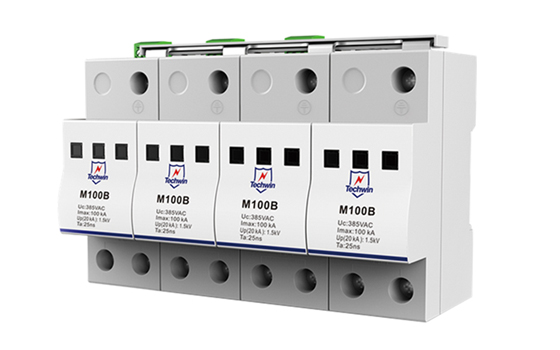
Stage 1 SPD (Type 1 / Class I)
Location: Inside the main power supply entrance distribution board of the building or shelter.
Function: A type 1 SPD is designed to divert the bulk of high-energy surge currents (10/350 μs waveform) caused by a direct or very nearby lightning strike.
Key Parameters:
Impulse Current (Iimp): ≥ 12.5 kA (10/350μs). For regions in India with high keraunic levels, a higher rating is recommended.
Voltage Protection Level (Up): ≤ 2.5 kV.
Selection Advice: Use a Type 1 SPD tested with the 10/350μs waveform.
Stage 2 SPD (Type 2 / Class II)
Location: At the sub-distribution board** inside the GCS operating area, or at the PDU right before the equipment rack.
Function: The type 2 spd is designed to further limit the residual voltage left by the Stage 1 SPD and suppress induced overvoltages from internal wiring, providing fine protection for sensitive devices.
Key Parameters:
Nominal Discharge Current (In): ≥ 20 kA (8/20μs).
Voltage Protection Level (Up): ≤ 1.5 kV. This value must be lower than the withstand voltage of your protected equipment (computers, radios, etc.).
Selection Advice: Use a Type 2 SPD. For exceptionally critical devices, a Type 3 SPD can be installed immediately upstream as a third stage.
2.2. Antenna & RF Line SPD Configuration (The Lifeline of the Drone System)
A disrupted communication link means a lost drone. Protection for antenna feed lines is absolutely critical.
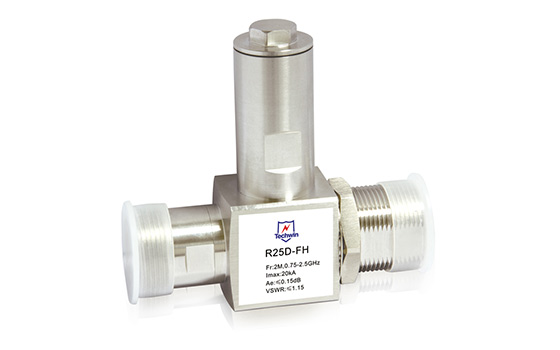
Location: On all antenna feed lines immediately after they enter the building/shellter, preferably right before the radio's RF input/output port.
Function: To prevent surges from entering the expensive radio modem and GPS receiver via the antenna (which acts as a large surge collector).
Key Parameters & Selection:
Connector Type: Must precisely match the feed line connector (e.g., N-type, TNC, SMA).
Frequency Range: Must cover the radio's operating band without causing excessive signal loss.
Data Link Radio (e.g., 900MHz, 1.4GHz, 2.4GHz, 5.8GHz): Select a Coaxial RF SPD for the corresponding band.
GPS/GLONASS Antenna (1.5GHz): Select a GNSS-specific SPD.
Insertion Loss: < 0.5 dB, to ensure communication quality is not degraded.
Power Rating: Higher than the radio's transmit power.
2.3. Network & Signal Line SPD Configuration
These lines connect servers, switches, and sensors, which are also highly sensitive.
Location:
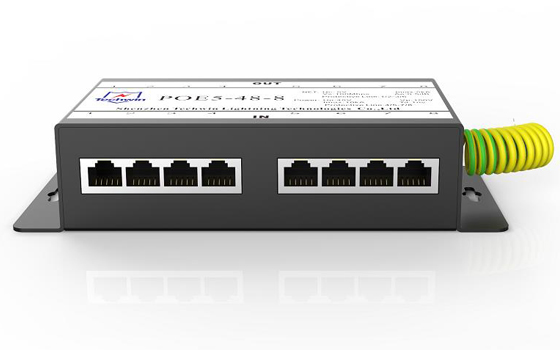
At the entry point of Ethernet, telephone, or serial lines entering the GCS from outside.
On cables connecting critical internal equipment (e.g., between the control host and the server).
Function: To protect equipment network cards, serial ports, etc., from damage by induced overvoltages.
Key Parameters & Selection:
Connector Type: RJ45(for Ethernet), DB9 (for RS232/422/485), RJ11 (for telephone).
Data Rate: Must support the line's data rate (e.g., 100/1000Mbps); otherwise, it can cause network slowdowns or failures.
Protection Level: Selected based on equipment sensitivity.
1.Grounding is Fundamental: All SPDs must be connected via short and thick conductors (recommended ≥6mm²) to a low-impedance earth electrode system. This is the prerequisite for effective SPD operation. In India, the earth resistance should be measured and ensured to meet local codes (typically required < 5Ω, the lower the better).
2. Equipotential Bonding: Perform bonding between all metal parts—equipment chassis, SPD earth terminals, metal cable trays, anti-static flooring—to eliminate potential differences and prevent "Earth Potential Rise."
3. Product Selection:
Choose reputable international brands or those with a strong reputation and reliable after-sales service company.
Ensure SPDs comply with the IEC 61643 series of standards.
4. Maintenance & Warning:
SPDs are consumable items. Their status should be checked regularly, especially before and after each monsoon season. If the status indicator shows failure (e.g., a red window), it must be replaced immediately.
Emphasize to the client that operating without SPDs or with failed SPDs exposes equipment worth hundreds of thousands or even millions of INR to significant lightning risk.
Configuring SPDs for a drone GCS in India must follow the principle of "Comprehensive Protection, No Path Omitted":
Power Entrance: Type 1 + Type 2 two-stage protection.
Antenna Entrance: Frequency-matched coaxial RF SPDs.
Signal Entrance: Connector and speed-matched network/signal SPDs.
Foundation: A high-quality earth electrode system and equipotential bonding.
This systematic SPD configuration will significantly ensure the stability, safety, and data integrity of the drone Ground Control Station in India's demanding thunderstorm environment.
 The Difference Between a Lightning Arrester and a Surge ProtectorDecember 8, 20211. What's a surge protection device (SPD)?A surge or spike refers to a transient over-voltage that is far larger than the specified operating voltage. In essence, it is a strong impulse with the d...viewHow to Select Lightning-Proof Surge Protectors for Buildings?March 18, 2025In the lightning protection of a building's power supply, a lightning-proof surge protector safeguards equipment by discharging lightning currents and limiting surge voltages. It is the main means...viewProtect Your Surveillance: The Importance of Surge Protectors for CCTV CamerasJune 6, 2024In today's world, ensuring the safety and security of your property is more crucial than ever. Closed-circuit television (CCTV) cameras have become an essential tool in monitoring and safeguarding...viewWhat Is a Transient Voltage Surge Suppressor (TVSS)?June 26, 2024Transient Voltage Surge Suppressor (TVSS) is a device used to protect electronic equipment from transient overvoltage, spikes, or surges. With the increasing reliance on network infrastructure due to ...viewSPD Supply: A Strong Backing for Power EquipmentOctober 9, 2024SPD supply is a protective device installed in power lines to prevent damage to electrical equipment caused by transient overvoltage or overcurrent due to lightning strikes. The primary function of SP...viewIs Surge Backup Protector the Same As Surge Protector?March 13, 20231.The Role of Surge Backup ProtectorBefore the advent of surge backup protectors, the backup protection devices of SPD surge protectors typically used fuses or circuit breakers to separate the short-c...view
 EN
EN
 jp
jp  ko
ko  fr
fr  de
de  es
es  it
it  ru
ru  pt
pt  ar
ar  vi
vi  th
th  ro
ro  bg
bg  nl
nl