
In the operational system of a wind farm, video monitoring plays a vital role in equipment inspection, safety management, and remote maintenance. With the release and growing implementation of the NB/T 10659-2021 "Wind Turbine Generator Systems – Video Monitoring Systems"Chinese standards, the industry has placed higher demands on the stability and reliability of these monitoring systems.

However, in actual operation, the problem often lies not with the "visible" camera itself, but with the "invisible" risk — lightning.
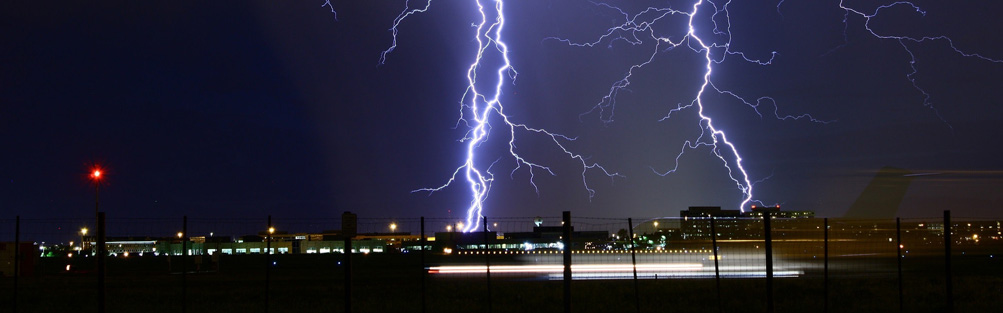
Wind farms are often located in mountainous, coastal, or open areas with frequent lightning activity. Wind turbine towers are tall and highly exposed, making them easy pathways for lightning strikes. When lightning current travels through the air-termination system into the ground, it creates a transient ground potential rise (GPR) in the grounding system. This transient voltage can then invade the video monitoring system through power cables, network cables, and other paths, leading to camera freezes, communication interruptions, or even equipment damage.
This is especially critical for modern video surveillance systems that widely adopt Power over Ethernet (PoE) technology, where a single Ethernet cable carries both power and data. Once hit by a lightning electromagnetic pulse (LEMP) or a surge overvoltage, the affected area becomes concentrated, and the consequences are more direct.
From a system protection perspective, the key to wind farm video monitoring is not just "installing cameras" but building a complete line protection system. In practice, protection is typically implemented at two levels:
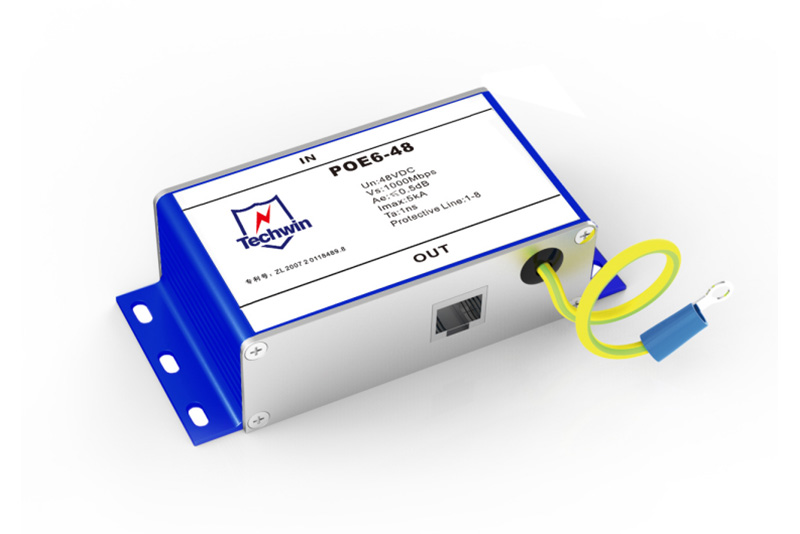
For the network and power supply lines from the switch to the front-end cameras, dedicated PoE surge protective device (SPD) can be deployed at critical nodes to simultaneously protect both the power and signal lines within the Ethernet cable.
TECHWIN’s POE5-48 and POE6-48 ethernet lightning arrester are custom-developed for this application scenario. Using multi-stage protection circuits and a line-to-line limiting voltage scheme, they effectively suppress the impact of lightning electromagnetic pulses and switching overvoltages on PoE ports. They achieve low residual voltage and low insertion loss while maintaining transmission performance, ensuring no interference with video signals. These are ideal for protecting Ethernet system equipment in wind farm tower bases, interiors, and nacelles.
For independently powered cameras installed in the wind turbine nacelle, on tower platforms, or around the field perimeter, both the power and network lines can become pathways for lightning intrusion.
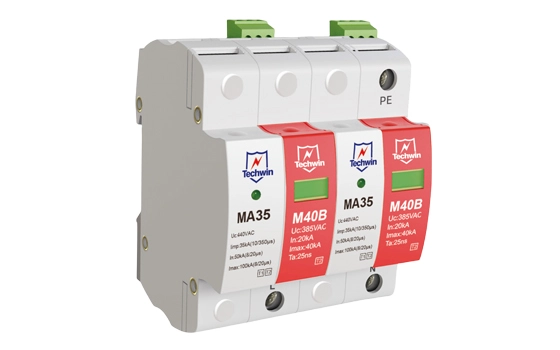
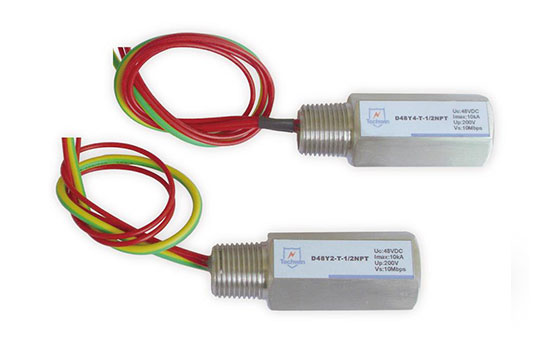
In such scenarios, integrated protection for both power and network lines is more efficient. TECHWIN’s M10-24/D05J4 series and MDI series power+network 2-in-1 SPDs can protect both the camera’s power supply line and network signal simultaneously. Through multi-stage protection and isolation/blocking technology, they comprehensively suppress lightning induction, surges, and ground potential back strikes. They are especially suitable for high-risk areas such as the top of wind turbines and around booster stations.
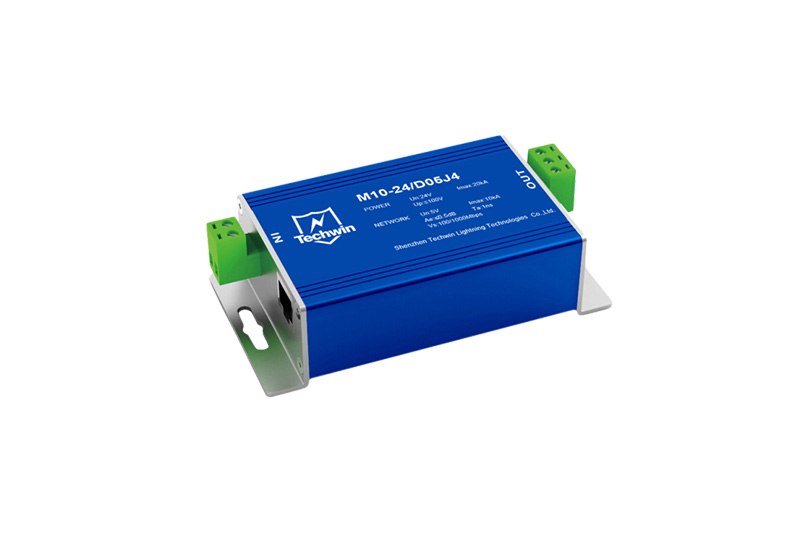
From an engineering practice perspective, single-point protection often fails to cover all risks. Only with multi-point coordination based on "entry point + line + terminal equipment", combined with equipotential bonding and grounding system optimization, can the lightning resistance of a video monitoring system be truly enhanced.
The stable operation of a wind farm depends not only on the reliability of primary equipment but also on the long-term stability of these "auxiliary systems." As an important "eye" for operations and maintenance, if the video monitoring system fails during a thunderstorm, it brings not only data interruption but also an amplification of safety hazards.
Against the backdrop of continuously improving standards (such as NB/T 10659-2021, Chinese standards), lightning protection design is also moving from "remedial measures" to "system engineering." Implementing protection in advance is often far more valuable than replacing equipment after a failure.
Choose TECHWIN for comprehensive, standard-compliant lightning protection solutions for your wind farm video monitoring systems.
 How to install a SPD?August 11, 2023Techwin surge protective devices (SPDs) are designed to protect electrical equipment from power surges. Installing an SPD is essential to ensuring the safety and longevity of your devices. Here is a s...viewLightning Protector: Essential Installation and Maintenance TipsFebruary 29, 2024As unpredictable as weather can be, one thing we can always count on is the presence of lightning during thunderstorms. While its awe-inspiring beauty can be captivating, the power of lightning can al...viewGuide to the Function and Selection of Surge Protection Device for LightningMarch 18, 2025As lightning hazards pose increasing threats to buildings and electronic devices, Surge Protection Device for Lightning has become particularly important in modern buildings and power systems. This ar...viewUse, Installation and Configuration of Surge ProtectorsMay 20, 20221. Parameters selected by SPD of surge protector at all level1. SPD-1If the first-level surge protector SPD1 is installed in the general power distribution room of a building, three switch-type surge ...viewPrinciple and Function of Signal Surge Protective DeviceMarch 18, 2025Working Principle of Signal Surge Protective DevicesSignal surge protective devices form a protective barrier by connecting in series between the signal channels and the equipment. When a surge voltag...viewThe IEC standards of SPDAugust 11, 2023IEC standards refer to the International Electrotechnical Commission standards, which are globally recognized and accepted guidelines for electrical and electronic devices. Spd stands for Surge Protec...view
 EN
EN
 jp
jp  ko
ko  fr
fr  de
de  es
es  it
it  ru
ru  pt
pt  ar
ar  vi
vi  th
th  ro
ro  bg
bg  nl
nl